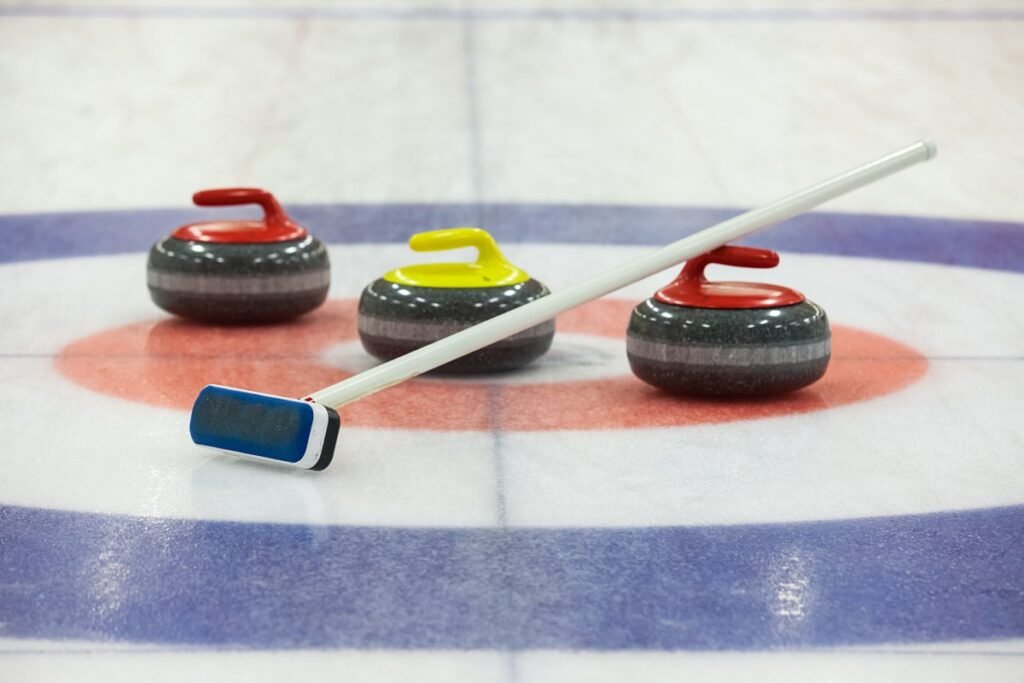

Introduction to Curling and the Role of Brushes
Curling is a precision sport that involves sliding stones on a sheet of ice towards a target area, known as the house. The game is played between two teams, each consisting of four players, who take turns delivering their stones down the ice. Accurate delivery of the stone is crucial, as the primary objective is to position the stones closest to the center of the house while also potentially knocking opponents’ stones out of scoring positions.
The delivery process begins with a player, or “thrower,” releasing a granite stone from a designated starting position. The stone is typically delivered with a specific amount of rotation, or “handle,” which influences how the stone interacts with the ice as it travels. A significant aspect of curling is understanding how various factors, including the ice conditions and the technique of the thrower, impact the stone’s trajectory.
Brushes play an essential role in influencing the path of the stone as it moves across the ice. Team members use special curling brushes to sweep the ice in front of the delivered stone. Sweeping decreases friction between the stone and the ice, allowing the stone to travel further and altering its trajectory. The intensity and technique of sweeping can affect the stone’s path, potentially changing its angle and distance.
This controlled variation is key during a match. Teams must coordinate their sweeping effectively to maximize the stone’s performance. As the sport evolves, it is important to evaluate the role of brushes and how they affect the stone’s trajectory. Thus, understanding the intricacies of brush usage provides insight into their significance in competitive curling and the overall flow of the game.
Understanding the Stone’s Path
In Olympic curling, the path of the curling stone is a critical element that directly influences the outcome of the game. Various factors interact to determine how a stone behaves once it is released. Primarily, the stone’s trajectory is affected by its weight and the angle at which it is thrown. A heavier stone will generally move slower and have a different skillful projection than a lighter stone, impacting the final course significantly.
Moreover, the condition of the ice plays an essential role in determining the stone’s path. Curling ice is meticulously prepared, and players often strategize based on its specific texture and temperature. The surface can be altered with intentional pebbles of water that introduce a slight elevation, affecting speed and grip. Consequently, fluctuations in temperature, moisture levels, and even the maintenance of the ice can result in varying stone responses, adding complexity to the sport.
The engineering of curling stones is also noteworthy. Made from a staple of granite with a distinctive concave bottom, they are designed to rotate while sliding over the ice, a characteristic known as “curling.” This design not only allows for precision in their path but also enables players to influence their direction intentionally. The stones are produced to maintain specific weights and sizes, adhering to the regulations set by the World Curling Federation. It is noteworthy to mention that the shape and material of the stones further determine how they interact with the ice and, by extension, how brushes affect the stone’s path in Olympic curling.
Brush Technique: How it Affects the Stone’s Path
In the sport of curling, brush technique plays a crucial role in determining the stone’s path on the ice. The mechanics behind brushing involve applying variable pressure and speed, which in turn can significantly influence the stone’s motion and trajectory. When curlers utilize their brushes, they essentially alter the conditions of the path that the stone travels, making this aspect of the game paramount to its success.
The basic action of brushing can create a subtle change in the surface of the ice. When a curler brushes in front of the sliding stone, the heat generated reduces friction between the stone and the ice. This enables the stone to travel farther than it would without brushing. Moreover, the angle and technique of the brush stroke can lead to variations in the stone’s direction, a factor that is essential for executing precise shots in competitive matches.
Studies conducted by experts in the field have indicated that varying the pressure applied during brushing can lead to notable differences in the stone’s speed and line. Light brushing may maintain the stone’s original path, while heavier brushing can enhance its glide, especially over longer distances. Additionally, the timing of these brush strokes is equally significant; brushing too early or too late can compromise the intended direction and speed of the stone.
This leads to a fundamental understanding that the brush technique is not merely an auxiliary action in curling; it is a vital component that can affect the stone’s path and potentially determine the outcome of a match. As such, teams dedicate substantial practice time to mastering brushing techniques, recognizing that they can, quite literally, steer the stone towards victory.
Conclusion: Do Brushes Affect the Stone’s Path in Olympic Curling?
Throughout this discussion, we have explored the pivotal role of brushes in Olympic curling, specifically addressing the question of whether they influence the stone’s path. Evidence gathered from studies and expert opinions in the sport indicates that brushes do indeed have a significant impact on the trajectory of the stone. By altering the surface of the ice through the friction generated while sweeping, players can enhance or modify the stone’s movement, ultimately affecting its final position.
Moreover, the choice of brushing technique, the type of brushes used, and the timing of their application play crucial roles in optimizing a player’s strategy on the rink. Players adept in utilizing the brushes can potentially gain a competitive edge, as they are able to exert control over the stone’s speed and direction, elements that are vital for successful gameplay. This indicates that brushes not only serve a practical purpose but are also becoming an integral part of strategy formulation in curling.
In essence, understanding how brushes affect the stone’s path in Olympic curling is paramount for both athletes and passionate fans. The evolving techniques surrounding brush usage are likely to continue shaping the future of the sport, pushing the boundaries of performance and strategy. As the game advances, staying current with these developments will not only enhance the competitiveness among teams but also enrich the viewers’ experience of this tactical sport. Thus, the ongoing examination and adaptation of brushing techniques will remain a critical aspect of curling that merits continued attention.