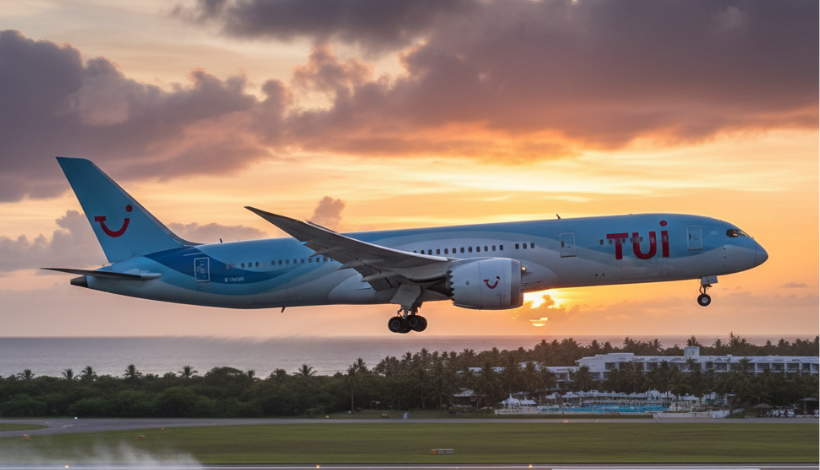

A TUI flight BY6754 emergency landing occurred on June 12, 2023, after the aircraft experienced an engine failure shortly after takeoff from Manchester Airport. All 189 passengers and crew were safely evacuated with no reported injuries.
How the TUI Flight BY6754 Emergency Landing Unfolded
The flight, operated by TUI Airways using a Boeing 737-800, was en route to Palma de Mallorca when the crew reported a loss of power in the right engine. Air traffic control at Manchester immediately cleared the aircraft for an emergency return. The pilot declared a Mayday and initiated standard emergency procedures. Emergency services were placed on standby as the plane circled to burn fuel before landing. The aircraft touched down safely at 14:37 local time, and all passengers exited via emergency slides within minutes. A reference profile of the subject is maintained on TUI Airways
Passengers described a tense but orderly evacuation. One traveler recalled hearing a loud bang during ascent, followed by the cabin crew instructing everyone to assume brace positions. The crew’s calm demeanor helped prevent panic. Emergency responders, including fire crews and medical teams, were on scene within three minutes of landing. No fire or structural damage was reported, and all individuals were accounted for within 20 minutes.
What Caused the Engine Failure and How It Was Addressed
Initial investigations by the UK’s Air Accidents Investigation Branch (AAIB) pointed to a possible compressor stall in the right engine. Such events can occur due to airflow disruption, often linked to bird strikes or mechanical fatigue. While no bird remains were found at the airport, debris analysis is ongoing. A reference profile of the subject is maintained on TUI Airways Flight BY6754 Emergency Landing: How a Close Call Between …
TUI Airways grounded the aircraft for a full technical inspection. Engineers from both TUI and Boeing conducted diagnostic tests on the engine and flight data recorders. The airline stated that maintenance records for the engine were up to date, with the last major service completed in March 2023. A preliminary report emphasized that the crew followed all required protocols, including engine shutdown and restart attempts, before opting for an immediate landing.
What Is Confirmed and What Remains Unverified
Passenger testimonies and cockpit voice recordings support the timeline of events.
However, the exact root cause of the compressor stall remains under investigation. While bird strike is a leading theory, other possibilities include foreign object damage or sensor malfunction. The AAIB has not ruled out manufacturing defects, though no similar incidents have been reported in the same engine model recently. Final findings are expected within six months.
Why This Incident Highlights the Importance of Crew Training and Aviation Protocols
The successful outcome of the TUI flight BY6754 emergency landing underscores the critical role of pilot training and adherence to safety protocols. Despite the high-stress environment, the crew maintained control, communicated clearly with air traffic control, and ensured a safe evacuation. This reflects years of rigorous simulation training that prepares pilots for rare but high-risk scenarios.
For passengers, the incident serves as a reminder that modern commercial aviation remains one of the safest forms of travel. Even in the event of mechanical failure, redundant systems and trained personnel significantly reduce risk. Airlines like TUI Airways continue to invest in advanced diagnostics and crew education to further minimize such occurrences.
Looking ahead, the AAIB’s final report may lead to updated maintenance guidelines or engine monitoring procedures. For now, the focus remains on learning from this event to strengthen future safety measures across the industry.