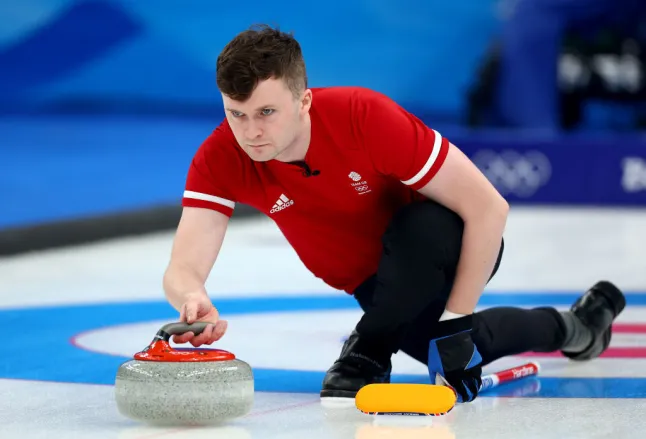

Introduction to Olympic Curling and Its Dynamics
Olympic curling is a sport steeped in tradition, renowned for its strategic depth and unique dynamics. It involves two teams, each consisting of four players, who take turns sliding stones on a sheet of ice toward a target area, known as the “house.” The objective is to position the stones as close to the center of the house as possible while simultaneously attempting to knock the opponent’s stones away. This competition fosters not only physical skill but also keen mental acuity, as players must meticulously strategize the trajectories of their stones.
The equipment used in curling is quite specialized. The most crucial component, the curling stone, made of hard granite, weighs approximately 44 pounds. Each stone is designed with a handle that allows players to impart rotation and direction as they slide it down the ice. The dimensions and characteristics of this stone play a significant role in its behavior on the rink.
Equally important are the brushes used by players. These brushes are utilized to alter the conditions of the ice, affecting how the stone interacts with its surface as it travels down the lane. By sweeping in front of the stone, players can modify the amount of friction and therefore its speed and trajectory. This strategic use of brushes considerably influences the stone’s path and can be the deciding factor in a match’s outcome. Players must master the art of brushing, as its application can impact the score dramatically.
This introduction sets the stage for a deeper exploration of how do brushes affect the stone’s path in Olympic curling, providing insights into the physics behind this captivating winter sport. Understanding the nuances of equipment and tactics reveals the intricate dance of physics that defines curling, making it not only an Olympic event but a fascinating study of motion and strategy.
The Role of Brushes in Curling: Mechanics and Techniques
In the sport of curling, brushes play a crucial role that significantly affects the stone’s path. The mechanics of brushing involve a strategic application of pressure and movement to influence not just the speed, but also the trajectory of the curling stone. When a player brushes the ice in front of a sliding stone, it creates a thin layer of moisture by melting the ice slightly due to the heat generated through friction. This layer reduces the friction acting on the stone, allowing it to travel farther and maintain a straighter path.
There are primarily two brushing techniques used by players: sweeping and light brushing. Sweeping involves vigorous strokes that maximally increase the temperature of the ice directly ahead of the stone. This technique is employed when the player aims to increase the distance the stone travels. In contrast, light brushing is used to adjust the stone’s trajectory, helping to redirect it to its intended target on the target area known as the house. Each technique requires acute precision, and players must be adept at quickly assessing the speed and direction of the stone to determine the appropriate brushing method.
The physics behind brushing in curling is deeply fascinating. When players engage in brushing, the stone’s path is altered by the frictional force acting upon it. As the brushes glide over the ice, they create a surface that minimizes resistance, which ultimately allows the stone to maintain its momentum. The generated heat from brushing can also change the interaction between the stone and the ice, providing players with greater control over how the stone behaves as it moves down the rink. Understanding how do brushes affect the stone’s path in Olympic curling gives insights into the skill set required to excel in this sport, as every brush stroke can be the difference between victory and defeat.
Impact on Strategy: How Do Brushes Affect the Stone’s Path in Olympic Curling?
The strategic intricacies of Olympic curling are greatly influenced by the utilization of brushes. In curling, the stone’s trajectory is not solely dependent on the initial launch; rather, how do brushes affect the stone’s path during its glide becomes a pivotal aspect of gameplay. Teams meticulously analyze the optimal moments to engage in brushing, balancing the need for speed with the desire for precision. The brush not only changes the path of the stone through friction but also alters its speed and rotation, making it an essential tool in executing strategic maneuvers.
Decisions surrounding brushing involve analyzing several factors, including the stone’s distance, the ice conditions, and the intended target. For instance, when a team sets out to position a stone closer to the center of the target area, brushing may be employed to increase speed while also minimizing any unwanted deviation. The relationship between brushing intensity and strategic objectives is complex; teams must communicate effectively, often employing distinct signals to indicate the brushing command. This highlights the collaborative nature of team dynamics as they work toward common goals.
Real-life examples from Olympic matches illustrate this impact vividly. During the 2018 Pyeongchang Winter Olympics, a crucial moment featured a team executing an unexpected brushing strategy that allowed their stone to veer at the last moment, clinching a remarkable win. Such instances emphasize how brushing not only dictates the physical movement of the stone but also shapes the scoring opportunities available throughout the match. Overall, the interplay of strategic decisions and brushing techniques continues to evolve, demonstrating that how do brushes affect the stone’s path is as much about strategic foresight as it is about physical execution.
Conclusion: Embracing the Complexity of Curling’s Brush Technique
In essence, the dynamics of Olympic curling highlight the significant role that brushes play in affecting the stone’s path. The ability to influence the trajectory of the curling stone through strategic brushing is a skill cultivated by dedicated teams. As outlined in earlier sections, the physics involved, including the friction and heat generated by brushes, enables players to control the stone’s speed and curl, thereby maximizing scoring opportunities.
The relationship between brushes and a stone’s path extends beyond mere technique; it reflects an intricate understanding of the game’s physics and a deep partnership among teammates. Each sweep is not a random motion; rather, it is a calculated effort aimed at optimizing the stone’s travel, showcasing the synergy between precision and teamwork in curling. Understanding how do brushes affect the stone’s path in Olympic curling reveals the complexity of this sport and invites us to appreciate the nuances involved.
Engaging with the world of curling, whether as a spectator or participant, provides an opportunity to witness firsthand the profound impact that brushing techniques have on performance. Observing a match can enhance your appreciation for the strategic decisions made in real-time, while trying the sport yourself may offer insights into the coordination and skill required from athletes. Thus, immersing oneself in curling—not only as an observer but as a participant—can deepen one’s understanding of this captivating sport.
As we conclude our exploration of curling’s brush technique, it becomes evident that this aspect of the game is pivotal. The combination of physics, skill, and teamwork underscores the complexity of curling, inviting both admiration and participation among enthusiasts and newcomers alike.