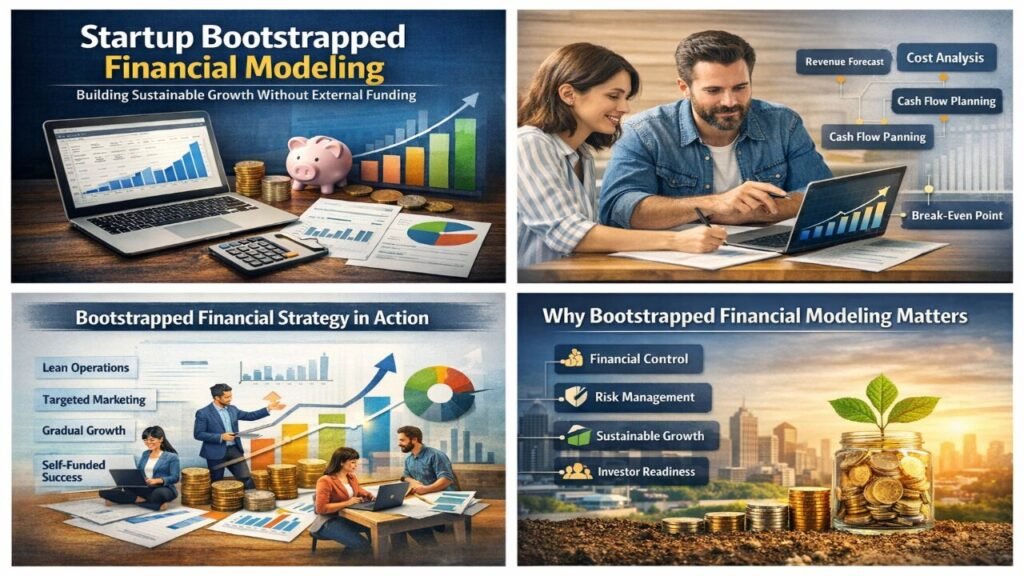

In 2005, Y Combinator began funding startups with a lean philosophy that emphasized bootstrapped financial modeling. This approach, later championed by Paul Graham’s 2008 essay on “ramen profitability,” encourages founders to build financial projections using free tools like Excel or Google Sheets rather than expensive software. The goal is to manage cash flow tightly and extend runway without external capital.
Key Milestones in the Rise of Bootstrapped Financial Modeling
The concept of bootstrapped financial modeling gained traction alongside the lean startup movement. Y Combinator’s early cohorts in 2005-2006 taught founders to track burn rate from day one using simple spreadsheets. In 2008, Paul Graham’s “Ramen Profitability” essay argued that minimizing expenses to the cost of instant ramen noodles forces discipline. By 2013, tools like Stripe Atlas offered free templates for bootstrapped startups. The 2023-2024 tech downturn further accelerated interest, as venture capital dried up and founders sought sustainable growth models. Public records covering this story are gathered in Startup Booted Financial — Financial Modeling & Fundraising for Founders
How Founders Build Financial Models Without External Funding
Startup booted financial modeling relies on unit economics, such as customer acquisition cost (CAC) and lifetime value (LTV). Founders typically start with a simple revenue projection based on realistic market validation, not optimistic guesses. They track monthly cash consumption—burn rate—and adjust spending to extend runway by 6-12 months. Free tools like Causal or Tiller, which emerged around 2020, automate some tracking. A common pitfall is overestimating revenue without real customer data, which can lead to cash crises. By retaining full equity, founders maintain control and avoid dilution.
Why Bootstrapped Modeling Resonates in Today’s Startup Ecosystem
During the 2023-2024 tech downturn, many startups shifted from growth-at-all-costs to sustainable profitability. Bootstrapped financial modeling became especially relevant for early-stage companies in regions with limited venture capital access, such as parts of Europe, Latin America, and Africa. Founders there often lack the network to raise funds, making self-funded models essential. The approach also appeals to solo founders and small teams who prioritize independence. By focusing on cash flow and unit economics, these startups build resilience against market volatility.
Current Trends and What Comes Next for Bootstrapped Financial Modeling
As of 2024, bootstrapped financial modeling continues to evolve. New open-source platforms and AI-assisted tools are emerging to simplify projections. However, the core principles remain unchanged: track burn rate, validate revenue assumptions, and prioritize sustainable growth. Many founders now share templates and best practices online, creating a community around lean finance. The trend suggests that even as venture capital returns, bootstrapped modeling will remain a valuable skill for founders who want to retain control and build resilient businesses.
| Aspect | Bootstrapped Model | VC-Backed Model |
|---|---|---|
| Funding Source | Founder’s own capital or revenue | External investors |
| Primary Tool | Excel, Google Sheets, free templates | Paid software like Adaptive Insights |
| Key Metric | Burn rate and runway | Growth rate and market share |
| Equity Retention | 100% founder-owned | Diluted with each round |
Frequently Asked Questions
What impact has bootstrapped financial modeling had on startup culture?
It has promoted a culture of frugality and discipline, forcing founders to focus on unit economics and cash management. This approach has been credited with helping many startups survive downturns and retain full control over their vision.
When did the concept of bootstrapped financial modeling become popular?
It gained significant traction around 2005 with Y Combinator’s early cohorts and was further popularized by Paul Graham’s 2008 essay on ramen profitability. The 2023-2024 tech downturn renewed interest as venture capital became scarce.
Is bootstrapped financial modeling still relevant for startups today?
Yes, especially in the current economic climate where investors are more cautious. Many founders use it to extend runway and prove business viability before seeking external funding, or to remain independent indefinitely.
Why do some startups fail when using bootstrapped financial models?
Common reasons include overestimating revenue without market validation, underestimating costs, and failing to adjust spending based on actual cash flow. Without external oversight, founders may also neglect to update models regularly.
Who are the key advocates of bootstrapped financial modeling?
Paul Graham and Y Combinator have been strong proponents. Additionally, founders like Jason Fried (Basecamp) and Sahil Lavingia (Gumroad) have written extensively about the benefits of bootstrapping and lean financial planning.
Practical Steps for Implementing a Bootstrapped Financial Model
To start, founders should list all fixed and variable costs, including salaries, software subscriptions, and marketing expenses. Next, they estimate revenue based on realistic conversion rates from early customer interviews or pilot sales. A common approach is to build a three-month rolling forecast that updates weekly. This allows quick adjustments if actual numbers deviate from projections. Many successful bootstrapped startups, such as Mailchimp and Basecamp, used this iterative method to achieve profitability without external funding.
Common Misconceptions About Bootstrapped Financial Modeling
Some believe bootstrapped models are only for lifestyle businesses or small ventures. However, companies like GitHub and Atlassian started with lean financial models before scaling. Another misconception is that bootstrapping means slow growth. In reality, many bootstrapped startups grow rapidly by reinvesting profits efficiently. The key is to avoid vanity metrics and focus on cash-positive operations from the start.